The Mineral Your Thyroid Can't Skip
Ask your doctor to run a thyroid panel and you'll get TSH, maybe a free T4 if you push for it. Ask them to check your selenium status and most will look at you sideways — it's one of the few nutrients that almost never makes it onto a standard blood panel, even though your thyroid physically cannot finish converting hormone into a usable form without it. Selenium is the cofactor behind the deiodinase enzymes that turn T4, the inactive hormone your thyroid pumps out, into T3, the version your cells actually respond to. No selenium, and that conversion slows down regardless of how "normal" your TSH looks on paper. This is exactly why some women with textbook-normal labs still feel like their thyroid is underperforming — the TSH number doesn't capture what's happening at the conversion step further down the chain. It's a mechanism endocrinologists know well from the research literature, but selenium testing simply isn't part of the routine workup that would catch it early.
It also drives glutathione peroxidase, one of the body's main antioxidant enzymes, which matters more than it sounds — thyroid tissue generates a surprising amount of hydrogen peroxide as a byproduct of making hormone, and without enough selenium to neutralize it, that tissue takes ongoing low-grade damage. Some researchers connected the dots here years ago: a widely cited 2002 trial by Margaret Rayman's group found that selenium supplementation lowered thyroid peroxidase antibodies in women with Hashimoto's thyroiditis. Newer trials haven't been nearly as convincing, though — a 2022 randomized study found selenium reduced antibody levels without measurably improving how patients actually felt or how their thyroid function tests looked. The mineral matters; it's just not the single lever some wellness accounts make it out to be.
Why It's the Blind Spot in Most Panels
Selenium deficiency looks like everything else.
Fatigue that doesn't lift with sleep, hair that's thinning at the part line, an immune system that seems to catch every cold going around the office — all of it overlaps so heavily with low iron, low B12, and actual thyroid disease that selenium rarely gets suspected on its own. And because most labs don't include it in a routine metabolic panel, a woman can go years assuming her fatigue is "just stress" when a $40 serum selenium test would have answered the question in a week. If you already have a diagnosed thyroid condition, particularly Hashimoto's, this is worth asking your doctor about directly — it's a cheap test that gets skipped by default, not because it's unhelpful.
There's also a technical wrinkle worth knowing before you order the test yourself: a standard plasma or serum selenium reading reflects what you've eaten in roughly the past few weeks, while a red blood cell (RBC) selenium test reflects longer-term status, closer to two or three months. If a plasma test comes back borderline and doesn't match how you feel, ask for the RBC version before assuming the mineral isn't the issue — plasma selenium can look fine right after a fish-heavy week and still miss a genuine long-term shortfall.
What Actually Has Selenium (Besides the Brazil Nut Cliché)
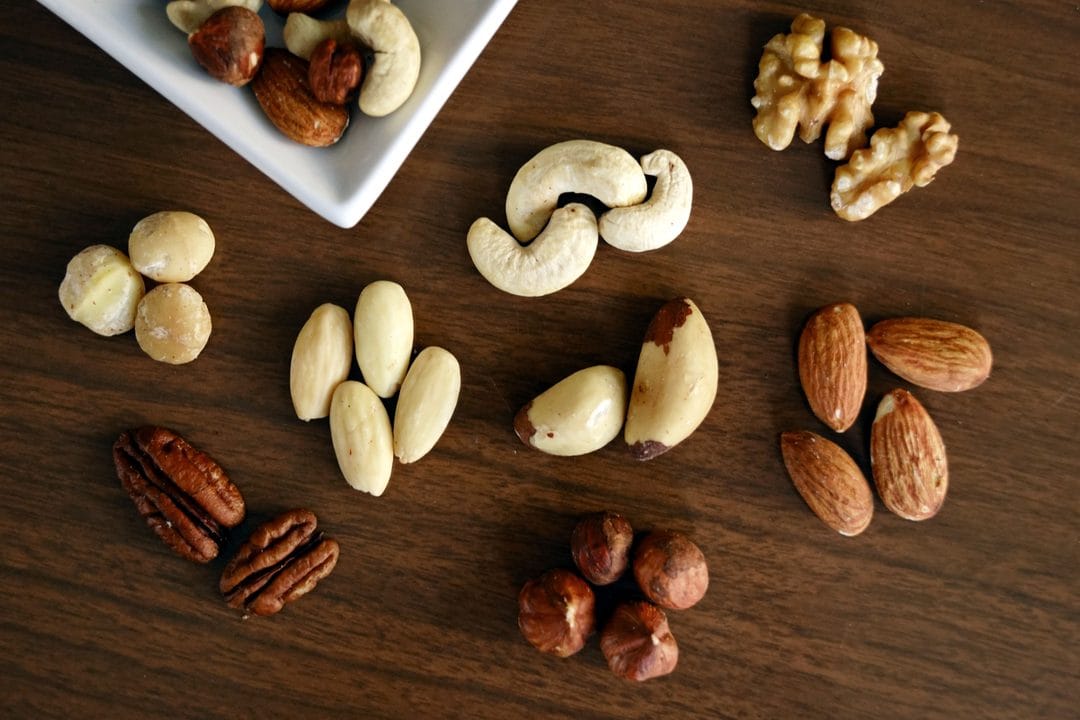
Brazil nuts get all the attention, and for good reason — they're the single most concentrated food source of selenium that exists, by a wide margin. But the numbers people quote ("one nut covers your whole day") are less reliable than they sound, because Brazil nut selenium content tracks the selenium level of the Amazon basin soil the tree grew in, and that varies enormously from grove to grove. A given nut might carry 68 micrograms; another from the same bag might carry several times that. Treat any single-nut number as a rough estimate, not a dosage instruction.
Beyond Brazil nuts, the reliable everyday sources are less dramatic but far more consistent:
- Canned tuna — roughly 68 micrograms per 3-ounce serving, which alone covers most of a day's need
- Sardines, which run close behind tuna and come with the added benefit of the bones you actually eat
- Eggs provide about 15 micrograms each — modest alone, but the number adds up fast if you're eating two or three a day.
- Sunflower seeds and shiitake mushrooms for anyone eating mostly plant-based, though the amounts here are meaningfully smaller than in seafood
Pork and chicken carry moderate amounts too, and the actual figure depends heavily on what the animal was fed and what soil that feed grew in — selenium is one of the few nutrients where geography genuinely changes the math on your plate.
The Brazil Nut Problem
Because Brazil nuts are so concentrated, they're also the easiest way to accidentally overshoot the upper limit. Selenosis — chronic selenium excess — shows up as a persistent garlic-like odor on the breath, brittle or splitting nails, hair loss (the irony of trying to fix thinning hair and causing more of it is not lost on anyone who's been there), and gastrointestinal upset. This isn't a one-nut-too-many problem; it takes sustained daily intake well above 400 micrograms to get there. But "a handful of Brazil nuts as a daily snack" is exactly the habit that gets someone there over a few months without them realizing it. Two or three nuts a few times a week is the safer long-term pattern — not a strict daily ritual. Chronic low-level overexposure is the actual risk profile here, not one indulgent afternoon with a trail mix that happens to be nut-heavy.
How Much You Actually Need
The RDA for adult women is 55 micrograms a day, rising to 60 during pregnancy and 70 while breastfeeding, with an upper limit set at 400 micrograms daily for adults. Most omnivorous diets clear this without any deliberate effort — a can of tuna or a couple of eggs across a normal week gets most women there. Where the gap actually shows up is in two fairly specific groups: women eating strictly plant-based in regions with selenium-poor soil (much of Europe, parts of China, and areas of New Zealand are documented as lower than average), and anyone with a diagnosed absorption issue like celiac disease or Crohn's, where gut inflammation interferes with mineral uptake regardless of diet quality.
Should You Supplement?
Skip the generic multivitamin-with-everything approach here. Most multivitamins throw in 55 to 100 micrograms of selenium as a matter of course, and if you're already eating fish, eggs, or the occasional Brazil nut, that supplement dose is stacking on top of food you're already getting it from — which is how someone ends up flirting with the upper limit without ever intending to. Get tested first if you have a thyroid condition or eat strictly plant-based in a low-selenium region; supplement to correct an actual measured gap, not on the assumption that more antioxidant support is automatically better.
If a test does come back low, a modest 100 to 200 microgram selenomethionine supplement for a defined period, rechecked afterward, is the sensible approach — not an indefinite megadose "for thyroid health" that nobody re-evaluates six months later. Selenomethionine is worth specifying by name, too: it's the form your body absorbs and stores most efficiently, closer to how selenium shows up in food, whereas sodium selenite — the cheaper form padded into a lot of budget multivitamins — is absorbed less completely and cleared faster. Two bottles can list the same "200 mcg" on the label and behave meaningfully differently once they're actually in you.
The Actual Takeaway
The two Brazil nuts you eat with your Tuesday afternoon coffee are already doing more for your thyroid conversion than the fifteen-ingredient gummy vitamin sitting in your cabinet. Selenium isn't a nutrient that needs a supplement aisle built around it — it needs a can of sardines in the pantry, a couple of eggs in the fridge, and, if you've got a thyroid diagnosis, one conversation with your doctor about a test that almost never gets ordered on its own.