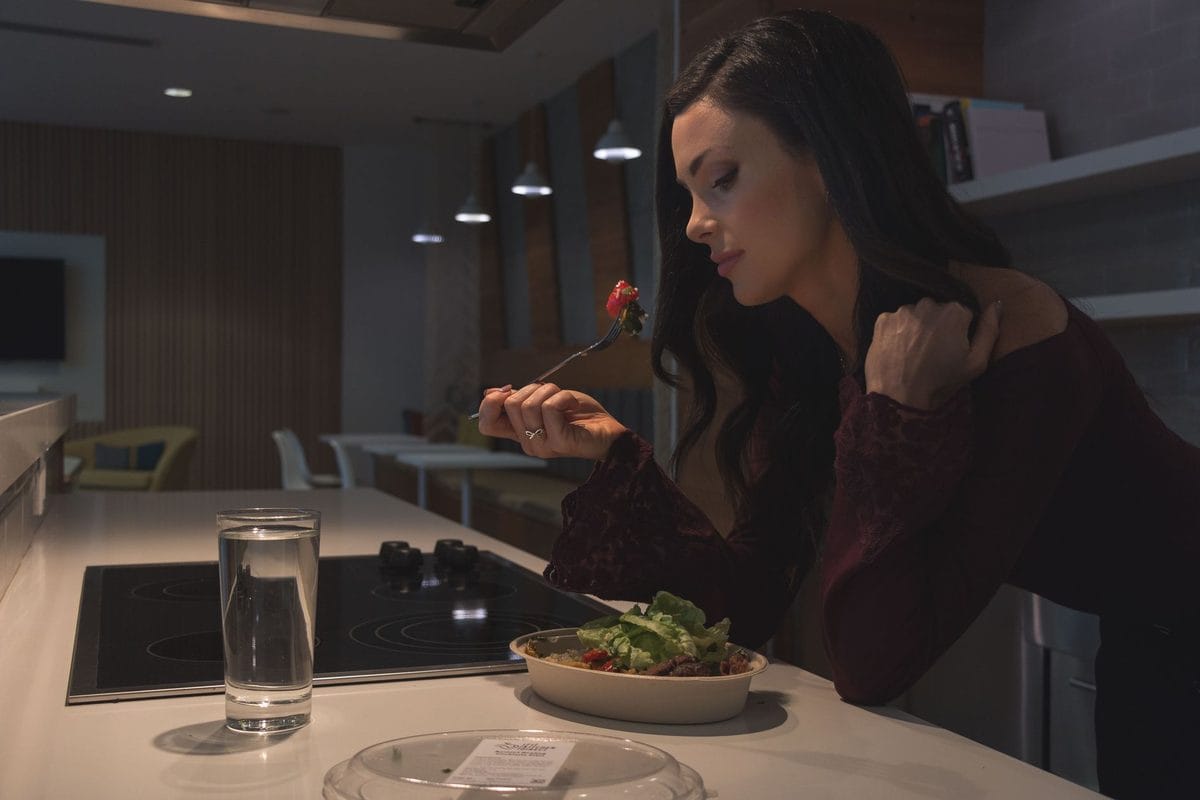
You've done the obvious things. The phone is on the other side of the room. The bedroom is cool and dark. You stopped the afternoon coffee weeks ago. And you're still lying there at 1am, wide awake, wondering what on earth is wrong with you. Here's a piece of the puzzle most sleep advice skips entirely: what you put on your plate, and crucially when, has a quiet but real hand in how you sleep that night.
Food won't knock you out the way a pill does, and anyone promising a magic bedtime snack is selling something. But the connection between eating and sleeping is genuine, it's better understood than it used to be, and it's one of the few sleep levers you can actually pull without a prescription. For women in particular — whose sleep gets buffeted by monthly hormone shifts, pregnancy, and the long turbulence of perimenopause — getting the food side right is worth real attention.
The chemistry, kept simple
The short version: your body builds the sleep hormone melatonin out of serotonin, and it builds serotonin out of an amino acid called tryptophan, which you can only get from food. Tryptophan turns up in turkey, eggs, dairy, oats, nuts and seeds — which is the grain of truth inside the old cliché about turkey making you drowsy. On its own the effect is modest, but it's real, and it's why a protein-containing evening meal does more for your sleep than a plate of plain pasta.
Here's the twist most people miss, though. Tryptophan needs a little help getting into the brain, and a modest amount of carbohydrate alongside it is what opens the door. So the ideal sleep-friendly evening isn't the high-protein, zero-carb plate that diet culture pushes — it's protein plus a sensible portion of slow carbohydrate. Wholegrain toast with a little nut butter, or oats with milk, hits this combination almost perfectly. The carbs you were told to fear at night are, within reason, part of the answer.
Timing beats almost everything
When you eat may matter more than precisely what you eat. A large, heavy meal eaten an hour before bed forces your digestion to work overtime exactly when your body is trying to wind down, and lying flat on a full stomach is a reliable recipe for the kind of acid reflux that wakes you at 3am. The fix is unglamorous but effective: finish your main meal around three hours before you plan to sleep. That's enough time for the bulk of digestion to settle.
Going to bed genuinely hungry isn't the answer either, mind you — a growling stomach will wake you just as surely as a stuffed one. This is where the small, smart bedtime snack earns its place. A banana with a few almonds, a small bowl of porridge, a little plain yoghurt with berries: each pairs that tryptophan-and-carbohydrate combination in a portion light enough not to sit heavy. The goal is "comfortably not hungry," not a second dinner.
What's quietly wrecking your sleep
Some of the worst offenders aren't obvious. Alcohol is the big one, and it fools almost everyone. A glass of wine genuinely does help you fall asleep faster — and then, as your body processes it over the following hours, it fragments the back half of your night, robbing you of the deep, restorative sleep that actually leaves you feeling rested. You wake at 4am and can't get back down. That second glass of red is not the nightcap it pretends to be.
A few others worth knowing about:
- Caffeine has a longer reach than people assume — it hangs around for roughly five to six hours, so a 4pm coffee is still half-active at 10pm. Watch the hidden sources too: green tea, dark chocolate, some painkillers.
- Very spicy or very fatty meals late on raise your core temperature and slow digestion, both of which fight the natural cooling your body needs to drop off.
- Sugary snacks before bed can spike then crash your blood sugar, and that middle-of-the-night dip is a classic trigger for waking.
- Too much liquid of any kind in the last hour buys you a 3am trip to the bathroom — front-load your fluids earlier in the evening.
None of this is a cure, and it would be dishonest to pretend a bowl of porridge fixes genuine insomnia — if your sleep has been badly broken for weeks, that's a conversation for your GP, not your kitchen. But the food side is the part of sleep most of us simply never adjust, and it's quietly within reach. Move dinner a little earlier tonight, pair a small carb with a little protein before bed, and skip the wine you were treating as a sleep aid. Then see how next week feels.